Forever, Australia spun up possible selection theories before—the important word here—a home Test series.
A batter was seeing it well but just not converting, or a quick was nursing an injury which was affecting his output. The backstop was safe, spin was, too—always, and the skipper was obviously always inked in. It was as if the powers-that-be mandated new names enter the early-summer consciousness; old names would be poked at and challenged. Then, predictably, the status quo would be maintained, a win duly registered, and the chastened possibles shunted back to the anonymity of Shield cricket. As somebody said, “It’s just the way it was.”
We played along and, for the most part, were happy with the win. How things are changing.
In a few weeks, the chatter will be deafening. The current insular, lockdown approach to selection and decision-making is rosy while the chocolates are being delivered. When they’re not, and favoured players are leaking oil, the fingers will point long and hard. The status quo is set to break.
It’s a win-or-go-home game now. Why?
I’ll offer this.
First, the ascension of self-importance. It’s a worrying condition.
Like most ailments, it remains unrecognised until identified, slowly eroding the immune system that kept trouble at bay.
Self-confidence is different. It is a more realistic belief in your capacity to perform tasks, solve problems, handle challenges, and make sound choices. Yes, self-confidence is grounded in trust and a willingness to learn. By contrast, self-importance is an inflated belief that you operate on a higher plane than others.
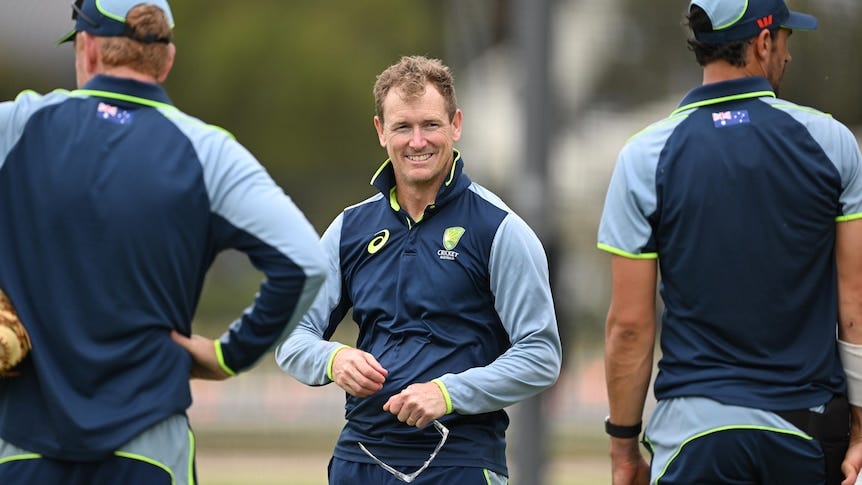
It’s time for George Bailey—the National selector—to visit the doctor. Ideally, be referred to a specialist before it’s too late.
No doubt, team selection is a complicated dance between ego and unity, individual skill and cohesion, particularly the higher up the chain you go.
Perhaps it’s the sameness of the rhetoric that surrounds them. Or perhaps it’s a national selector who abandons his mandate to dress and sit alongside his players, as if he were one of them—like the erratic uncle who won’t leave your wife alone on Christmas Day.
One of the first books I read after playing was Phil Jackson’s Eleven Rings—thank you, Hector. Not knowing what the fuck to do, I chose coaching as an obvious path. I still read it over—if I had Bailey’s ear, I would send him a copy, maybe two, along with a pair of chinos and a green and gold polo shirt.
Jackson maintains that the best teams are those where each member knows their role, embraces it, and, most importantly, understands that their individual story is just one part of a larger narrative. That’s not overly complicated, right?
This thinking is far removed from the current Australian dressing room.
Quoting Jackson, “The beautiful paradox of team sports is the moment when an individual transcends their individual ego.”
Really, I’m not sure where that leaves this Australian Test team. Their recent opponents—of lesser quality—identified as united and willing to fight out a dicey situation. The South Africans made mistakes, sure, but they rallied when needed, fought back to gain ground, and eventually succeeded. Cummins’ team simply retreated.
Given a microphone, I would ask, “What does our style of play look like? Who’s deciding who should play, or not, and are we selecting for the now? And how can you defend a skill group that continually fails—and do it with such blind self-assurance? Why does it look like certain players are protected? And why?
It shits me to say this; I can’t quite put my finger on it.
Maybe it is a team split by age, or maybe the best player is growing increasingly distant and self-absorbed. I’m not sure—it is a hard watch, though.
I fear Australia has played the you’ve-got-this-wrong card one too many times. The credits have run dry, and the prickliness has to abate. The performances are no longer ‘unequivocal’—there’s no hiding from the fact that they’ve lost four of their last seven Test matches.
I’m arguing this is not the worst place to start.
Forced changes will happen. There’s an opportunity to free Travis Head to number five. Retain the straightness of Matt Renshaw at the top, and give him a right-hander as company—I’m assuming Sam Konstas leads that race. Josh Inglis has a crack at three, and the two all-rounders bat six and seven.
The bowling? I’ll leave that to Mr Bailey!
Nick